Museum / Gallery Sights in Saint-Tropez — 7 of Our Favourites

Discover and book the top Saint-Tropez sights

exterior of the fort at the st tropez citadelle

1. Musee d'Histoire Maritime

Location
Saint Tropez

Recently renovated, this modern museum is located in the dungeon of the village's Citadel, allowing visitors to discover the true identity of Saint-Tropez as a maritime city through its last 500 years of history.

Visitors will follow the town’s seamen across the seas of the world, whether on short trips and fishing expeditions along Provence’s coast, or voyages aboard large merchant sailing boats beyond Cape Horn, journeys along the coasts of Africa and India or on liners of the famous Far East steamship company.

The museum of maritime history is an invitation to discover famous Saint-Tropez heroes such as Bailli de Suffren, General Allard or Hyppolite Bouchard, as well as thousands of anonymous folk who served the nation aboard the navy’s vessels or who faced stormy seas aboard merchant ships. You can also learn about the town's daily life and relationship to the sea, through traditional fishing techniques.

Open every day except certain public holidays, so check first. Guided tours need to be booked in advance.

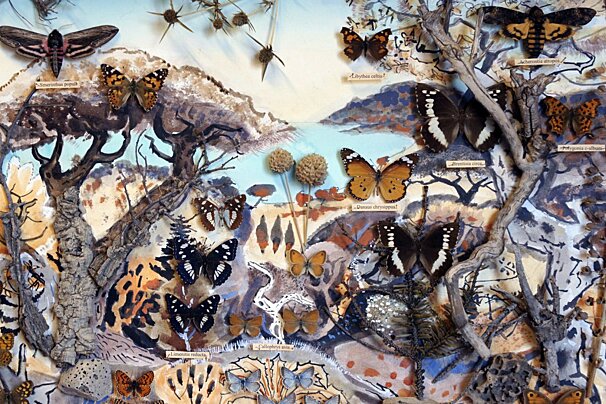
A framed display of butterflies and moths including a painting of a landscape

2. La Maison des Papillons - Butterfly Museum

Location
Saint Tropez

The Butterfly Museum is located in the old town, spread across two floors, the collection houses an enormous quantity of different species. There are over 35,000 specimens, including rare types from Africa and South America. 

The museum was created by painter Dany Lartigue in his own private house, a typical Tropezian home. Lartigue is a passionate butterfly aficionado and has been collecting specimens for decades. His collection is mainly focused on French species, such as the rare Apollon Noir from the Mercantour region.

Being a painter himself, all the butterflies are arranged in an artistic way, so that visitors can appreciate the colours and details of these wonderful animals in the best way possible, displaying them over landscapes painted by Lartigue. A great place to learn more about butterflies and spend hours contemplating their beauty.

Musee de la Mer, Ile Sainte-Marguerite

3. Musee de la Mer, Ile Sainte-Marguerite

Location
Cannes

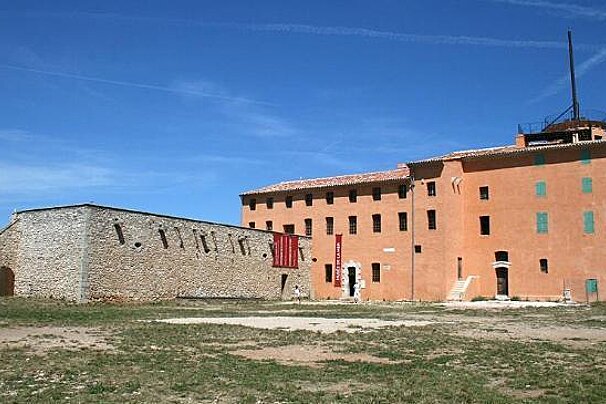
Situated within the Royal Fort on Ile Sainte-Marguerite in the Bay of Cannes, this museum is a place not only of learning but also of rich history.

This historical monument overlooks the sea and is home not only to the Musee de la Mer, but you can also visit the old state prison cell and the famous iron mask, where the mysterious prisoner was imprisoned for eleven years. In addition to this, you can see the Huguenot Memorial and murals by Jean Le Gac on the theme of the imprisoned artist.

On the first floor, you will find archaeological materials that were discovered in the sea and originate from Roman and Saracen wrecks. Tradelière Batéguier (ceramics, cargo of amphorae, glasses...) and fragments of Roman wall paintings from land excavation of Île Sainte-Marguerite are also on display. A space for temporary exhibitions opens on a wide overlooking the sea facing terrace Cannes coastline, the Southern Alps in Cap d'Antibes and the Esterel.

opening of the gendarmerie museum in saint tropez

4. Musee de la Gendarmerie et du Cinema

Location
Saint Tropez

As well as discovering the many cinematic influences in the region you are invited to explore the incredible history of the 'Gendarmes de Saint-Tropez'

Saint-Tropez was brought to the attention of the cinema world in the 1960's with a series of French cult films about the comic lives of the gendarmes (police) based in the pretty port town of Saint-Tropez.

The building that housed the real gendarmerie from 1789 until 2003 became legendary in the films of director Jean Girault. Brigitte Bardot, known as the face of Saint-Tropez, also features in the museum as it was here that Roger Vadim realised the film “…And God Created Woman”, creating with it the myth of Saint-Tropez.

The museum offers an introduction to the history of cinema in Saint-Tropez and reveals the many films shot in the Var peninsula, along with the various trades related to the cinema.

Musee de l'Annonciade - Art Museum, Saint Tropez

5. Musee de l'Annonciade - Art Museum

Location
Saint Tropez

The Annonciade museum was created in 1922 and holds impressive art work dating from 1890 to 1950, including some of the greatest French masterminds such as Matisse, Derain and Marquet.

Located inside a 16th-century chapel, this small museum is a great example of how Saint Tropez was an important avant-garde centre at the beginning of the 20th century. It was the painter Paul Signac who discovered this traditional fishing port in 1892 while travelling around the French coast in his yacht Olympia. He fell in love with the town and bought a house here, where he set up a workshop, La Hune, inviting other famous artists such as Matisse, Cross, Derain or Marquet to join him.

The artists displayed have based their work upon the study of colour, light, as well as shape. The whole collection is composed of pictures essentially belonging to the pointillist, Nabis and Fauvist movements. You can check out pieces by Klee, Matisse, Signac, Serat, Braque, Bonnard, Gauguin... lots of them depicting the village of Saint-Tropez.

Check their website for opening dates and times.

A statue of a man with a beard is against a red wall

6. Archaeology Museum, Fréjus

Location
Frejus

Situated right next to the cloisters of the Cathedral in Fréjus, the museum houses some great examples of Roman artefacts from the ongoing excavations in the city.

During the Roman times Fréjus, or Forum Julii as it was known then, named after Julius Caesar, was a prosperous port city. It was given to the Roman army's 8th Legion which added to the wealth in the area and thus the creation of many Roman buildings and features. There are numerous well preserved architectural features including an amphitheatre, theatre and an aqueduct that brought the water supply to the residents.

Many excavations have taken place over the years across the city and are continuing today. The finds are well preserved within the archaeological museum where they are displayed in context and with historical reference.

Fort Royal Museum, Ile Sainte-Marguerite

7. Fort Royal Museum, Ile Sainte-Marguerite

Location
Cannes

In 1617, the Duke of Guise gave Jean de Bellon the task of building a fort intended to block sea access to Cannes. Constructed between 1624 and 1627 on the site of remains that dated back to Roman antiquity, at the time it was nothing more than a simple fortified house.

These humble origins would be enhanced a few years later by the Spanish who then occupied the islands. Only two years later in 1637 the French took back possession of the island and named the fortress Fort Royal.

At the end of the seventeenth century, the fort became a state prison and continued to grow in size. The prisoners held inside the fort include most notably: the famous, but nevertheless unidentified, Man in the Iron Mask, held for 11 years from 1687 to 1698; Six protestant pastors, imprisoned following the revocation of the Edict of Nantes, from 1689 until their deaths in 1713; Jean-Baptiste Suard, who would become the eternal secretary of the French Academy, incarcerated between 1751 and 1753; The Smala d'Abd el-Kader, from 1843; 600 Austrian prisoners, detained in 1859 after the battle of Montebello; Marshall Bazaine, the only prisoner to have escaped from the Royal fort in 1873, in what legend describes as a fantastic escape and after whom a terrace of the fort is today named.